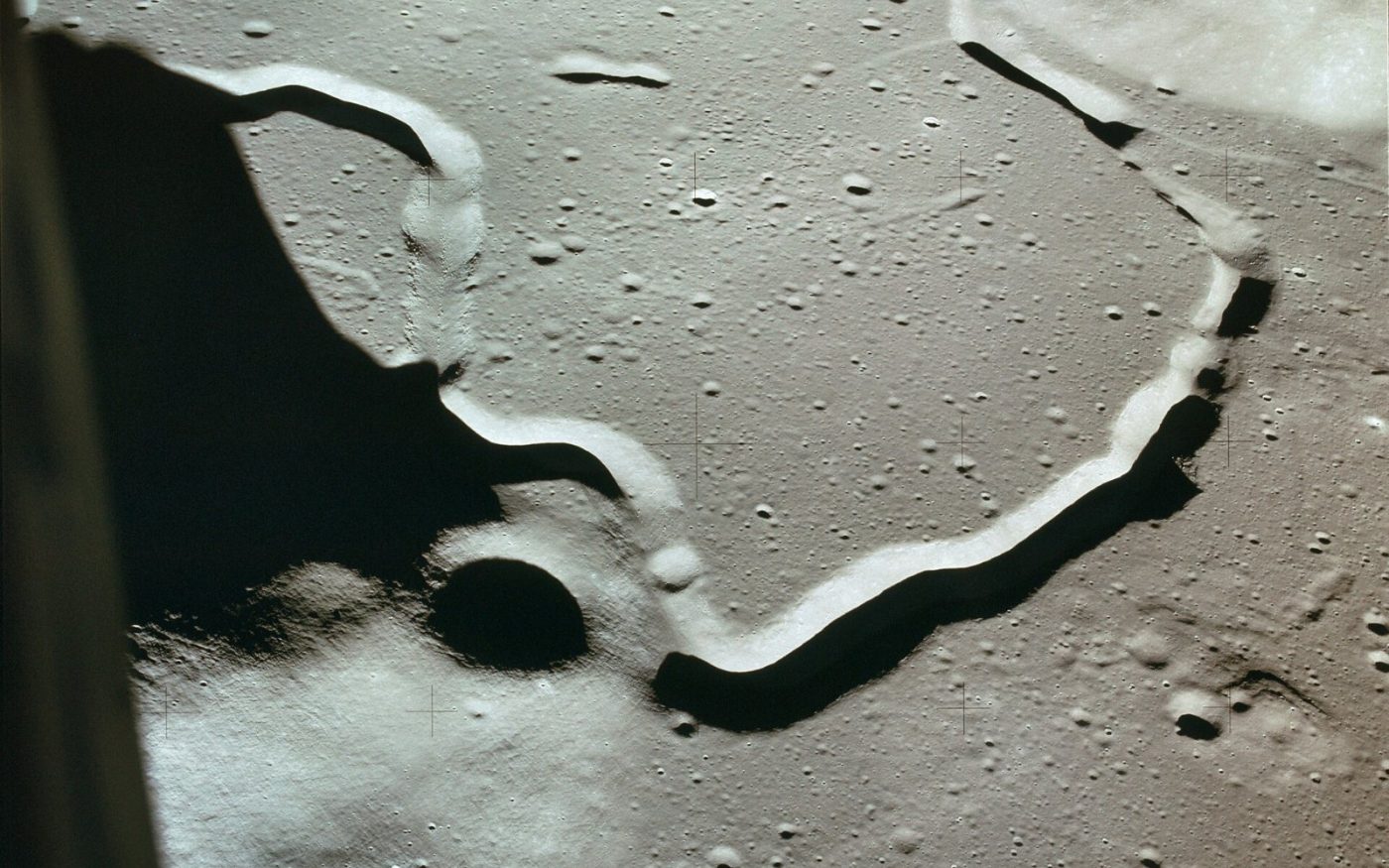
An expert committee of the US National Academies of Sciences, Engineering, and Medicine on 21 October 2026 named four places on the Moon, all far from the lunar south pole, where it says astronauts could do the most valuable science on short future missions. The NASA-sponsored report, Human Exploration Across the Moon, recommends Bhabha Crater on the far side, Mons Hadley near the Apollo 15 landing site, the Orientale Basin and the Aristarchus Plateau.
What happened
The study was carried out by the Committee on Key Nonpolar Destinations Across the Moon to Address Decadal-Level Science Objectives with Human Explorers, co-chaired by geochemist James Day of the Scripps Institution of Oceanography at UC San Diego and engineer Daniel Dumbacher of Purdue University. According to Purdue, the 13-member committee, supported by four subcommittees spanning planetary science, physics, applied science and biology, worked for 18 months before presenting its findings.
NASA’s Artemis programme is focused on the lunar south pole, where permanently shadowed craters may hold water ice. The committee was asked to look beyond the poles and identify where short crewed visits could answer the highest-priority questions set out in the planetary science community’s decadal survey. In the Academies’ announcement, Dumbacher said the chosen locations “give science the best shot at learning as much as possible from a crewed mission”.
The four recommended sites
- Bhabha Crater (far side): described as the most remote and isolated place ever considered for human explorers. Crews could sample the Moon’s oldest preserved impact basin, study the far-side crust and set up radio and optical astronomy experiments shielded from Earth’s radio noise.
- Mons Hadley (near side): close to where Apollo 15 landed in 1971. Astronauts could examine hardware and biological materials left exposed to the lunar environment for more than half a century, collect new samples and support Artemis and Moon-to-Mars planning. The site also suits a space weather observatory and a test of radiation shielding made from local soil.
- Orientale Basin: on the edge of the near side as seen from Earth, it is the best-preserved large multi-ringed impact basin in the solar system and a seismically quiet location. The committee suggests sample collection and deployment of a gravitational-wave observatory.
- Aristarchus Plateau (near side): a raised volcanic landscape built from ancient lava flows, where sampling could reveal how lunar volcanism worked and whether useful resources are present. Like Mons Hadley, it could host space weather and radiation-mitigation experiments.
Key recommendations to NASA
- Extend how far astronauts can travel from the lander beyond the current 2-kilometre limit for surface excursions.
- Develop a simple, unpressurised crewed rover for short trips.
- Design deployed instruments to survive many lunar day–night cycles.
- Place a high-resolution observation tool in lunar orbit to support safety and mission planning.
- Provide continuous communications for crews on the surface.
Background
The Apollo landings between 1969 and 1972 all touched down on the near side, mostly in relatively flat, equatorial terrain chosen for safety. Samples from those six sites still underpin much of what scientists know about the Moon’s age and origin. Since then, orbital missions have mapped the whole surface and revealed regions — the far side, giant impact basins and young volcanic terrains — that Apollo never reached. The Academies published a similar report on priority human exploration sites on Mars late last year.
Analysis: why it matters
The report does not change NASA’s near-term plans, which remain centred on the south pole, but it gives the agency an independent, science-driven shortlist for what comes after the first Artemis landings. That matters in budget debates: a destination backed by a National Academies consensus study is easier to defend than one chosen internally. The emphasis on longer-range rovers, durable instruments and an orbital mapping asset also signals that the science community wants the Artemis architecture designed with flexibility in mind, rather than optimised only for a single polar base.
The choice of a far-side crater is particularly striking. No human has ever landed on the far side, which cannot communicate directly with Earth and would require relay satellites. Recommending it signals that the scientific payoff — access to the Moon’s oldest basin and a radio-quiet site for astronomy — is judged worth the extra complexity. With China also planning crewed lunar landings around 2030, where astronauts go, and what they bring back, is becoming as much a question of scientific leadership as of engineering.
Sources
- National Academies — New report identifies four Moon sites for crewed missions to explore to advance scientific discovery
- National Academies — Human Exploration Across the Moon (project updates)
- National Academies Press — Human Exploration Across the Moon (report)
- Purdue University — Purdue researcher leads group advising the nation on future of lunar exploration
- U-Today (University of Twente) — ITC researcher helps to plan human missions to the Moon
- SpacePolicyOnline — What’s Happening in Space Policy October 18-24, 2026