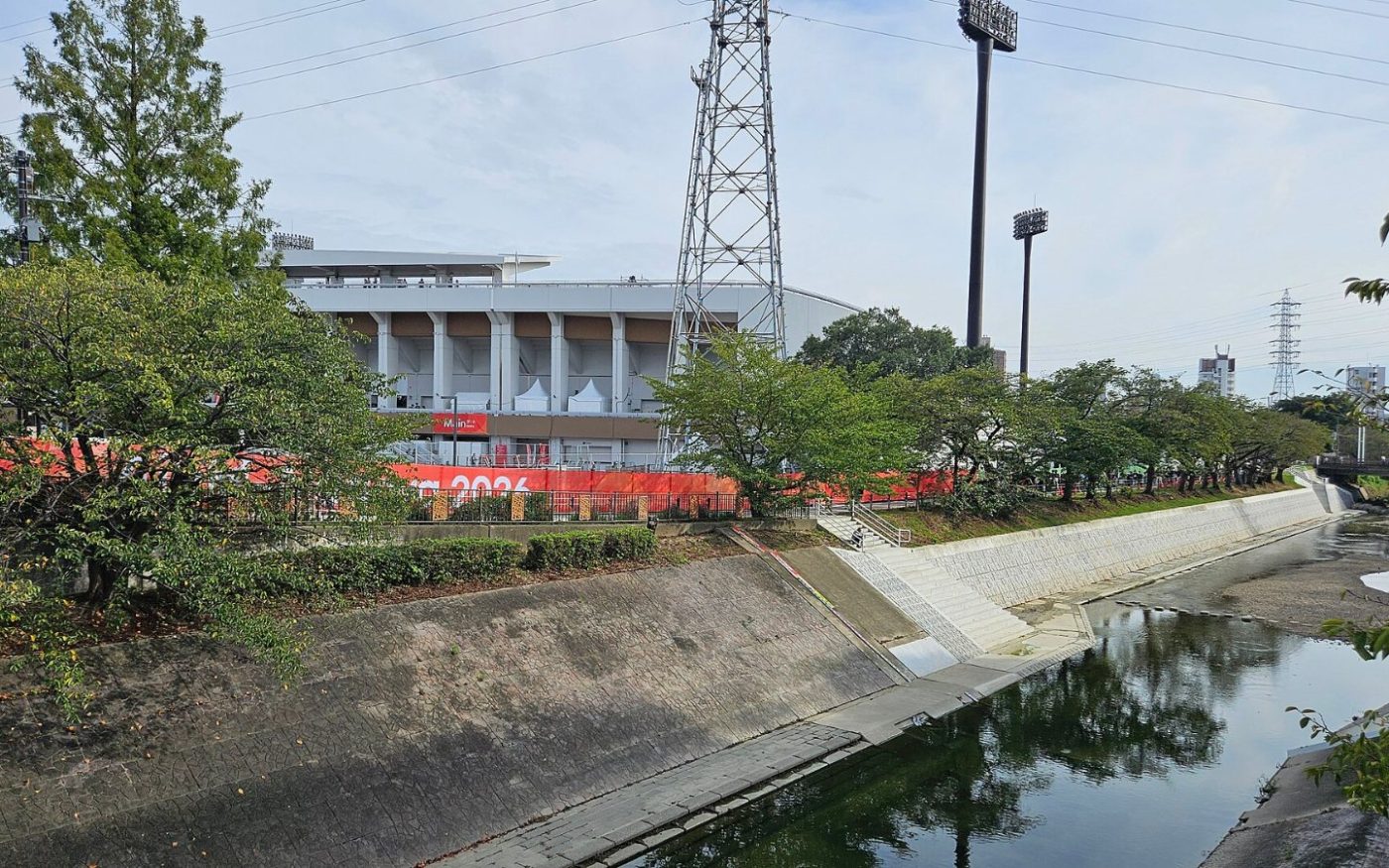
The 20th Asian Games closed in Nagoya, Japan, on Sunday, 4 October 2026, after a fortnight that produced dozens of world records and a crop of teenage stars, but also persistent complaints about accommodation, transport and empty stands. Organisers of the Aichi-Nagoya Games had deliberately skipped building a conventional athletes’ village to save money, and the event is now being judged as a test of whether leaner, cheaper multi-sport festivals can work.
What happened
The closing ceremony took place at the Mizuho Park athletics stadium in Nagoya, where the Olympic Council of Asia (OCA) flag was handed to Qatar, host of the next edition in Doha in 2030. Qatar’s prime minister and foreign minister, Sheikh Mohammed bin Abdulrahman bin Jassim Al-Thani, received the flag, and the Doha organisers used the occasion to unveil a new visual identity and the slogan “The Games We Live For”, according to the Qatar News Agency.
China topped the medal table for a 12th consecutive Games with 169 gold, 89 silver and 83 bronze medals, its best result at an Asian Games held outside China, CGTN reported. Host nation Japan finished second with a national-record 83 golds and 269 medals in total, and South Korea was third with 39 golds.
Key facts
- Dates: 19 September to 4 October 2026, across Nagoya and Aichi Prefecture.
- Scale: more than 17,000 athletes and officials, a larger contingent than at a Summer Olympics, according to AFP; 43 sports and 469 gold-medal events, according to CGTN.
- Records: 50 world records were broken, OCA director general Husain Al-Musallam told AFP.
- New sports: padel, mixed martial arts and virtual taekwondo made their debuts.
- Standout athletes: China’s 13-year-old swimmer Yu Zidi won three golds and was named female MVP; Thai sprinter Puripol Boonson, 20, took the 100m and 200m double and was named male MVP; China’s Zhang Zhanshuo became the first swimmer to win seven golds at a single Asian Games.
- Next host: Doha, Qatar, in 2030, two decades after it first staged the Games in 2006.
Background: a deliberately frugal Games
Japan last hosted the Asian Games in Hiroshima in 1994. For the 2026 edition, organisers chose not to build a dedicated athletes’ village, housing competitors instead in temporary wooden units, on the cruise ship Costa Serena and in hotels. Organisers presented the approach as a possible template for future multi-sport events facing pressure over cost and legacy, AFP reported.
The model drew complaints. Several teams described the temporary units as cramped, with beds too short for some athletes and, at times, not enough beds to go around. Buses ran late or failed to arrive, two teams were sent to the wrong venue, North Korea’s anthem was played for South Korea’s hockey team, and the South Korean flag failed to rise at the men’s football medal ceremony. The president of the Korean Sport and Olympic Committee, Ryu Seung-min, publicly gave the organisation a failing grade.
Attendance was another weak point. The opening ceremony took place in front of large banks of empty seats, and only 998 spectators watched a women’s football semi-final between Japan and South Korea in a 50,000-capacity stadium, according to AFP. Days of rain during the athletics programme also kept crowds away, a point acknowledged by Japanese Olympic Committee president Seiko Hashimoto, who conceded there had been many problems while saying Japan still wants to host more international events.
On the field
The sporting record was strong. Beyond the swimming and sprint headlines, Japan’s 17-year-old Shin Ohashi set a men’s 200m breaststroke world record, North Korean weightlifter Ri Song Gum set three world marks in a single day, and 11-year-old Yuki Kurihara of Japan became the youngest champion in Asian Games history by winning an esports title. India beat Pakistan in the cricket final, while South Korea beat Japan 1-0 in the men’s football final in front of about 30,000 fans.
Analysis: why it matters
The cost debate goes regional. Rising price tags have made cities wary of bidding for the Olympics and continental games. Aichi-Nagoya tried to answer that concern by reusing existing venues and avoiding permanent housing that can become a white elephant. The complaints show the trade-off: savings on infrastructure were partly paid for in athlete comfort and logistics. Whether the OCA and future hosts adopt the model may depend on how much of the disruption is attributed to the concept itself rather than to execution.
Athlete welfare as a metric. The OCA’s own director general framed the issue in practical terms, arguing that sleep and reliable transport are preconditions for performance. That puts athlete welfare, rather than headline records alone, at the centre of how multi-sport events are assessed, an argument athletes’ groups have been making for years.
Young stars and new disciplines. The prominence of competitors aged 11 to 20, and the debut of esports-adjacent and commercial sports such as padel and MMA, reflect organisers’ attempts to reach younger audiences. Yet the thin crowds suggest that broadening the programme does not automatically translate into ticket sales.
The Gulf’s growing role. The handover to Doha continues the shift of major sporting events towards Gulf states with the resources to build and fund them. Doha 2030 will likely present itself as a contrast to Nagoya’s austerity, placing the question of what a “sustainable” Games looks like back on the agenda for the next four years.
Sources
- Qatar News Agency — Qatar receives OCA flag to host 21st Asian Games
- Qatar News Agency — New identity of Doha 2030 unveiled at closing ceremony
- Eyewitness News (AFP) — Asian Games close in Japan after records, rancour and rain
- Kuwait Times (AFP) — Asian Games close after records, mix-ups and rain
- CGTN — China tops medal table as Aichi-Nagoya Asian Games close
- The Star — Nagoya Asian Games close after a fortnight of turmoil and teenage triumph