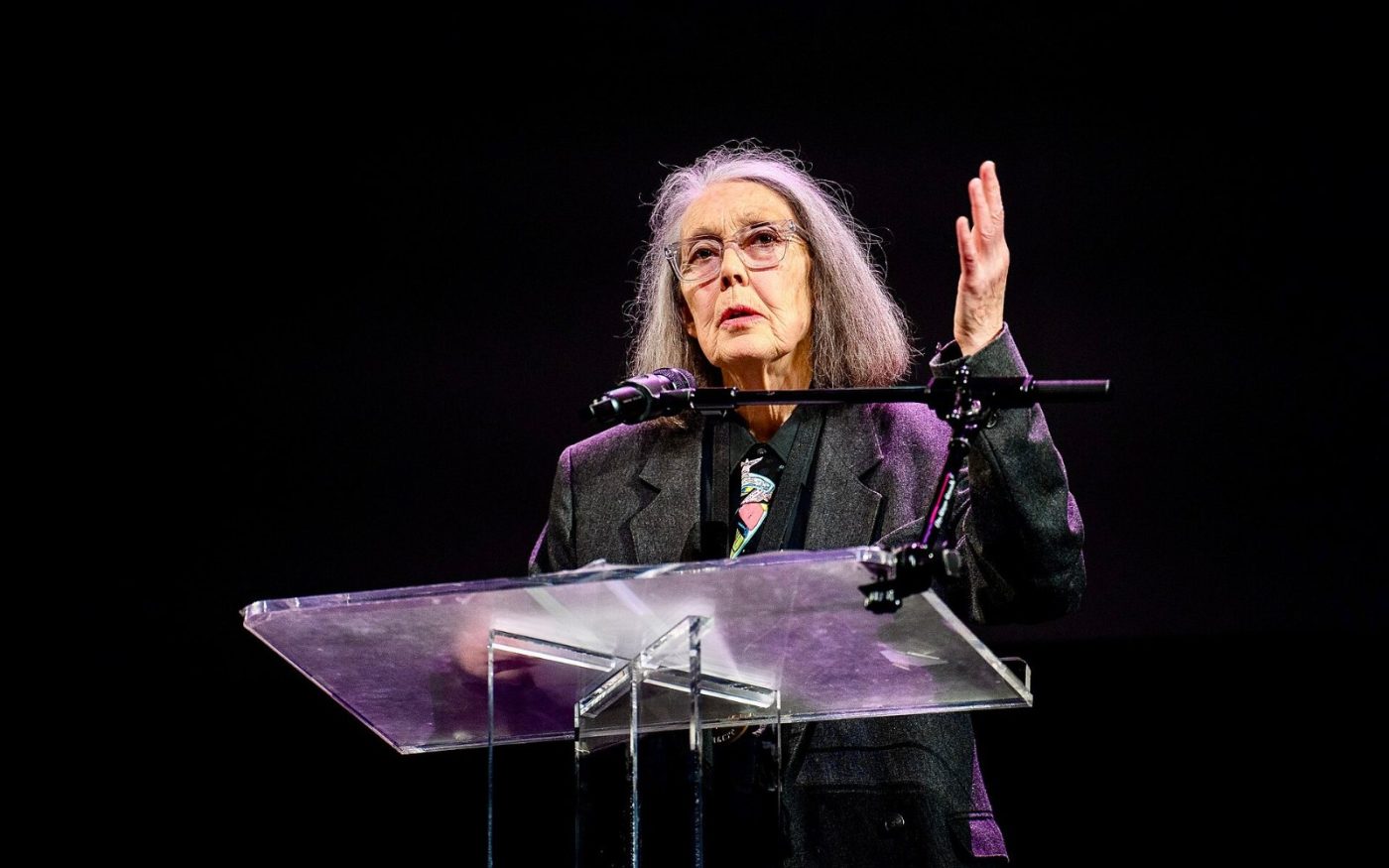
The Canadian poet, essayist and classicist Anne Carson has been awarded the 2026 Nobel Prize in Literature. The Swedish Academy announced the decision in Stockholm on Thursday, 8 October 2026, praising what it called her “bold and inventive oeuvre”, a body of work that the Academy said has opened up new forms for contemporary writing through a playful conversation with the literature of ancient Greece and Rome.
What happened
Carson, 76, was named the 2026 laureate at the Academy’s traditional midday announcement, the fourth of the week’s Nobel awards after medicine, physics and chemistry. According to the Academy’s permanent secretary, Ingrid Carlberg, the writer was caught completely off guard when contacted; she was in Iceland at the time, where she holds citizenship and spends part of the year, Reuters reported.
The award carries 12 million Swedish kronor, roughly 1.2 million US dollars, which Swiss news agency Keystone-SDA noted is one million kronor more than in previous years. Carson will be invited to receive the prize at the formal Nobel ceremony in Stockholm on 10 December, the anniversary of Alfred Nobel’s death.
Who is Anne Carson?
Born in Toronto, Carson trained as a classicist and has spent much of her career teaching ancient literature at universities while publishing work that refuses to stay inside a single genre. Her books move between poetry, essay, translation, criticism, opera libretto and performance text, often within a single volume.
Her best-known work is probably Autobiography of Red (1998), a “novel in verse” that reimagines a fragment of Greek myth as a coming-of-age story. Other widely discussed titles include The Beauty of the Husband, a book-length narrative poem about the end of a marriage; Norma Jeane Baker of Troy (2019), a performance piece that fuses the figure of Helen from Euripides with Marilyn Monroe; and a graphic-novel adaptation of Euripides’ The Trojan Women (2021). She is also a prolific translator of Greek poetry and drama, including the fragments of Sappho.
Carson has published more than 20 books, several of which have been adapted for the stage. In 2024 she disclosed in the London Review of Books that she has Parkinson’s disease, Al Jazeera recalled.
Key facts
- Laureate: Anne Carson, Canadian poet, essayist and translator, aged 76.
- Announced: 8 October 2026, by the Swedish Academy in Stockholm.
- Academy’s reasoning: a “bold and inventive” body of work that, in dialogue with the classical tradition, has created new literary forms.
- Prize money: 12 million Swedish kronor (about 1.2 million US dollars).
- Previous laureate: Hungarian novelist László Krasznahorkai (2025).
- Canadian context: Carson is the first Canadian writer to win since short-story author Alice Munro in 2013.
- Ceremony: 10 December 2026, Stockholm.
Background
The literature prize, established under Alfred Nobel’s will, has been awarded since 1901 and is often criticised from two directions: for past omissions of canonical writers and for selections that general readers find obscure. Carson had been listed among the favourites by bookmakers this year, according to Reuters, which makes her a less surprising choice than several recent laureates.
Recent years have seen the Academy reward writers who work against conventional form, including the Norwegian dramatist and novelist Jon Fosse in 2023, South Korea’s Han Kang in 2024 and Krasznahorkai, known for sentences that run for pages, in 2025. Carson’s selection extends that pattern, this time to a writer for whom the boundaries between scholarship and invention are themselves the subject.
Analysis: why it matters
A prize for hybrid writing. Carson’s work has long been difficult to shelve. Bookshops file it under poetry, but much of it reads as essay, lecture or theatre script, and her translations are frequently as experimental as her original books. By choosing her, the Academy is signalling that formal risk-taking, rather than mastery of a single established genre, can be the basis of a Nobel-level career.
The classics as a living resource. At a time when classics departments in many countries face shrinking enrolment and budget pressure, the award places the study of ancient Greek and Latin at the centre of contemporary literary culture. Carson’s career demonstrates that close philological reading, the scholar’s attention to individual words, can generate new art rather than simply preserve old texts. That message is likely to be cited by universities and translators arguing for the value of the humanities.
Poetry back in the spotlight. Poets have won the prize less often in recent decades than novelists. A win for Carson, whose readership extends well beyond specialist poetry audiences, is likely to drive sales and new translations of her work, and may encourage publishers to take more chances on cross-genre books.
A transnational identity. Carson is formally a Canadian laureate, but her Icelandic citizenship and the global reach of her subject matter make her a figure who sits comfortably across literary borders. For Canada, the win is a reminder that its literary reputation rests on more than prose fiction, the field in which Munro, Margaret Atwood and others built its international profile.
Questions remain about how much public engagement Carson, who has spoken openly about her illness, will undertake during the Nobel season. The Academy’s December ceremony and the laureate’s traditional lecture will offer the next public moments for the 2026 prize.
Sources
- NobelPrize.org — Nobel Prize in Literature 2026 (press release)
- NobelPrize.org — Nobel Prize in Literature 2026
- Al Jazeera — Canadian Anne Carson wins 2026 Nobel Prize in Literature
- Khaleej Times (Reuters) — Canadian poet, writer Anne Carson wins 2026 Nobel Prize in Literature
- blue News (Keystone-SDA) — Nobel Prize in Literature awarded to Canadian Anne Carson