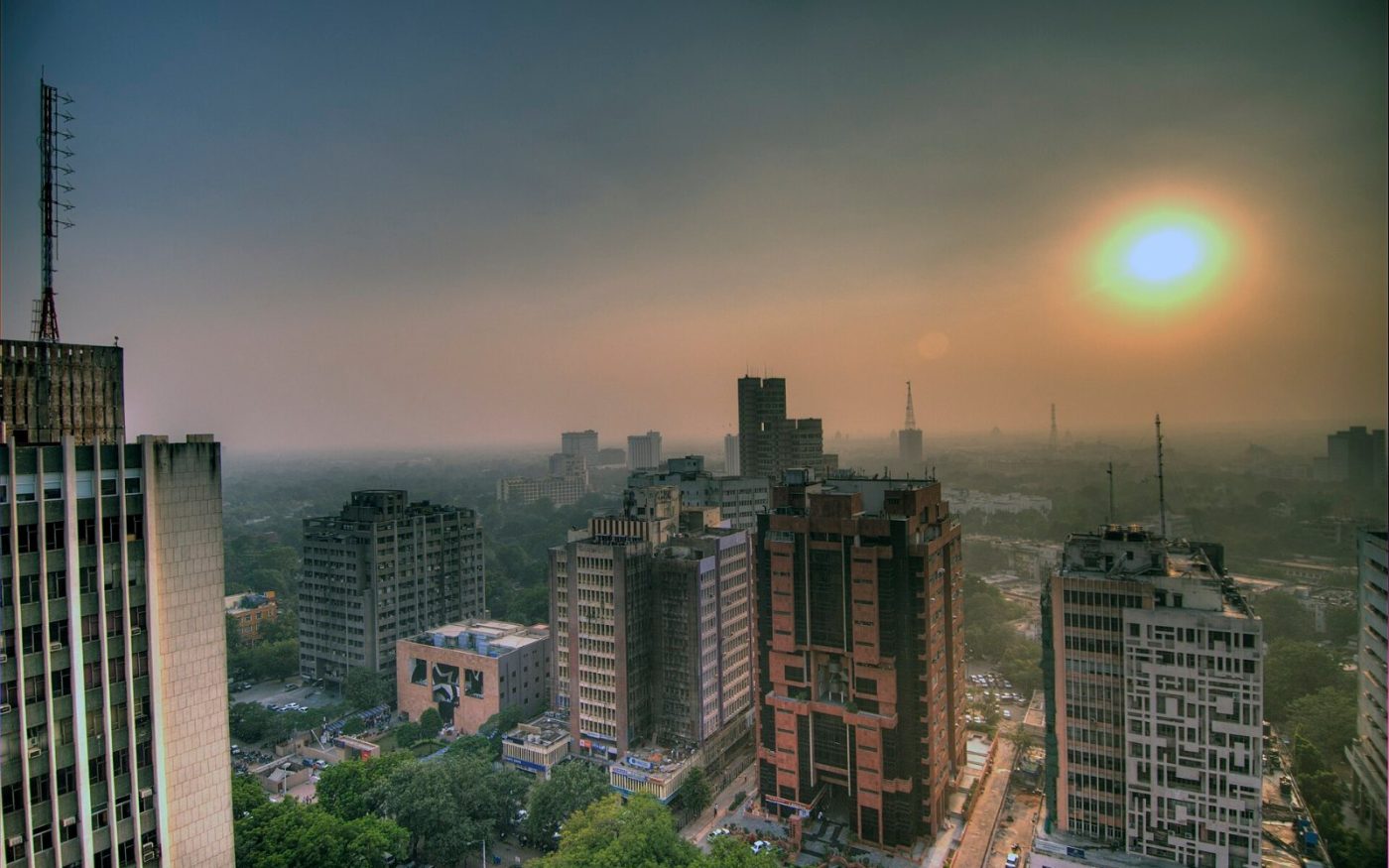
On 21 October 2026, India’s Commission for Air Quality Management (CAQM) put Stage I of the Graded Response Action Plan (GRAP) into force across the National Capital Region. The emergency anti-pollution framework took effect after Delhi’s air quality fell into the “poor” band for the first time this autumn. The order applies immediately across Delhi and neighbouring districts in Haryana, Uttar Pradesh and Rajasthan. It marks the official start of the region’s winter smog season, a few weeks before air quality there usually reaches its worst.
What happened
Central Pollution Control Board (CPCB) data cited by Free Press Journal show that Delhi’s 24-hour average Air Quality Index was 179 (“moderate”) on 20 October, the day of Dussehra. By 2 pm on 21 October it had reached 244, and the CPCB’s 4 pm bulletin recorded 245, as DD India reported. Readings between 201 and 300 count as “poor”. A few monitoring stations, including Jahangirpuri and Pusa, were already in the “very poor” range above 300.
CAQM’s GRAP sub-committee met that afternoon. It reviewed the AQI data together with forecasts from the India Meteorological Department (IMD) and the Indian Institute of Tropical Meteorology (IITM), which indicated that air quality was likely to stay “poor” for the next few days. According to the public broadcaster News On AIR, the panel invoked “all actions under Stage-I of GRAP with immediate effect across the entire NCR”. It directed implementing agencies to “keep strict vigil and intensify measures” so that pollution would not rise further.
What Stage I requires
Stage I contains 25 action points. Most of them target dust, open burning and vehicle emissions:
- Enforcing dust-control rules at construction and demolition sites, with a ban on work at unregistered sites of 500 square metres or more.
- Strictly banning open burning of biomass and municipal waste, and stepping up surveillance at landfills to prevent fires.
- Strictly checking pollution-under-control (PUC) certificates, acting against visibly polluting vehicles, and enforcing bans on overage diesel and petrol vehicles.
- Allowing only electric, CNG and BS-VI diesel inter-city and inter-state buses to enter from neighbouring states.
- Limiting the use of diesel generator sets, asking power distribution companies to keep outages to a minimum, and enforcing the ban on coal and firewood in eateries’ tandoors.
- Mechanised road sweeping, water sprinkling, traffic management at congested junctions, and diverting trucks not bound for Delhi onto peripheral expressways.
Delhi Environment Minister Manjinder Singh Sirsa asked residents to report violations through the Green Delhi app.
Background: a tougher plan this year
CAQM approved a revised GRAP schedule on 28 September 2026, before the season began. As News On AIR and ThePrint reported, the revision moved some measures to earlier stages. Restrictions on diesel generators and inter-city buses, for example, now begin at Stage I instead of Stage II. Stage III limits on older BS-III petrol and BS-IV diesel cars were extended to Sonipat district in Haryana. Web-based monitoring of dust control at construction sites was also extended beyond municipal limits. Under the revised plan, the four stages contain 25, 8, 10 and 5 actions respectively.
GRAP has four stages: “poor” (201–300), “very poor” (301–400), “severe” (401–450) and “severe+” (above 450). Each stage adds to the measures of the stages below it. At Stage III and IV, authorities can stop non-essential construction, restrict vehicles and move schools online.
Key facts
- Date invoked: 21 October 2026, with immediate effect across the NCR.
- Trigger: Delhi AQI 244 at 2 pm (CPCB), up from 179 the previous day.
- Stage: GRAP Stage I (“poor”, AQI 201–300), 25 action points.
- Forecast: IMD/IITM guidance indicated air quality was likely to remain “poor” in the following days.
Analysis: what it means
Delhi’s air usually gets worse from late October. Winds weaken, temperatures fall, and a shallow layer of cold air traps pollutants near the ground. Smoke from crop-residue burning in Punjab and Haryana and emissions from Diwali firecrackers add to the load. Stage I is therefore an early warning, not a sign of crisis. The real test is whether the earlier, stricter measures in the revised plan can keep the region out of the “severe” range that has brought school closures and construction bans in recent winters.
The way GRAP works has a known weakness: it reacts after pollution has already risen. Most action points enforce rules that are meant to apply all year, such as dust control, waste-burning bans and vehicle checks. Experts have long argued that Delhi’s pollution can only be cut lasting by structural changes across the whole airshed, including cleaner industrial fuels, better public transport and controls on power plants. With El Niño conditions likely to bring calmer, drier weather to parts of South Asia this winter, the coming weeks will show how well the revised plan works.
Sources
- News On AIR (Prasar Bharati) — CAQM invokes Stage-I GRAP across NCR as Delhi AQI enters poor category
- DD India — CAQM invokes Stage-I of GRAP across Delhi-NCR
- News On AIR — CAQM approves revised GRAP schedule for National Capital Region
- ThePrint — Winter pollution playbook updated: CAQM tightens GRAP 2026 for Delhi
- Free Press Journal — Delhi-NCR air quality slips to ‘poor’ after Dussehra, CAQM imposes GRAP Stage-I
- Commission for Air Quality Management (official site)