Brazil’s presidential runoff on Sunday, October 25, 2026, is heading into its final days with President Luiz Inácio Lula da Silva and right-wing Senator Flávio Bolsonaro effectively level. A Datafolha survey published on Thursday, October 22, put Bolsonaro on 47% and Lula on 46%, a gap well inside the poll’s two-point margin of error, according to Reuters. A Quaest poll released a day earlier showed a similarly narrow one-point race.
What happened
Datafolha interviewed 2,154 voters between October 20 and 22. Besides the 47–46 split, 5% said they would vote blank and 2% were undecided. The pollster’s previous survey, a week earlier, had Bolsonaro two points ahead, at 47% to 45% (Reuters).
Quaest’s survey for Globo, carried out from October 17 to 20 and published on October 21, had Bolsonaro at 45% and Lula at 44%, narrowing from a two-point gap the previous week. Measured by valid votes only, that equates to roughly 50.6% against 49.4%. Quaest also found approval of Lula’s government at 46% against 47% disapproval, and high rejection figures for both men (The Rio Times).
The two candidates met for their first head-to-head debate on Band TV on Sunday, October 18. Bolsonaro argued that the economy would improve once Lula was removed and corruption tackled; Lula defended his welfare programmes and challenged both candidates to open their personal finances to scrutiny before the vote. Observers noted that much of the exchange focused on the candidates’ families rather than policy. On the same day, Brazil’s federal police asked the Supreme Court to investigate Bolsonaro over a money-laundering allegation involving a lawyer close to him, which he denies (AP via ITV News).
Background
The runoff became necessary after the first round on October 4, when neither finalist cleared 50% of valid votes. Bolsonaro, the eldest son of former president Jair Bolsonaro, finished first with about 47% and roughly 56 million votes, ahead of Lula on about 45%, a margin of around 2.2 million votes. The result upended final pre-election polls: Datafolha had shown Lula ahead by three points and Quaest by five (MercoPress; AP via ITV News).
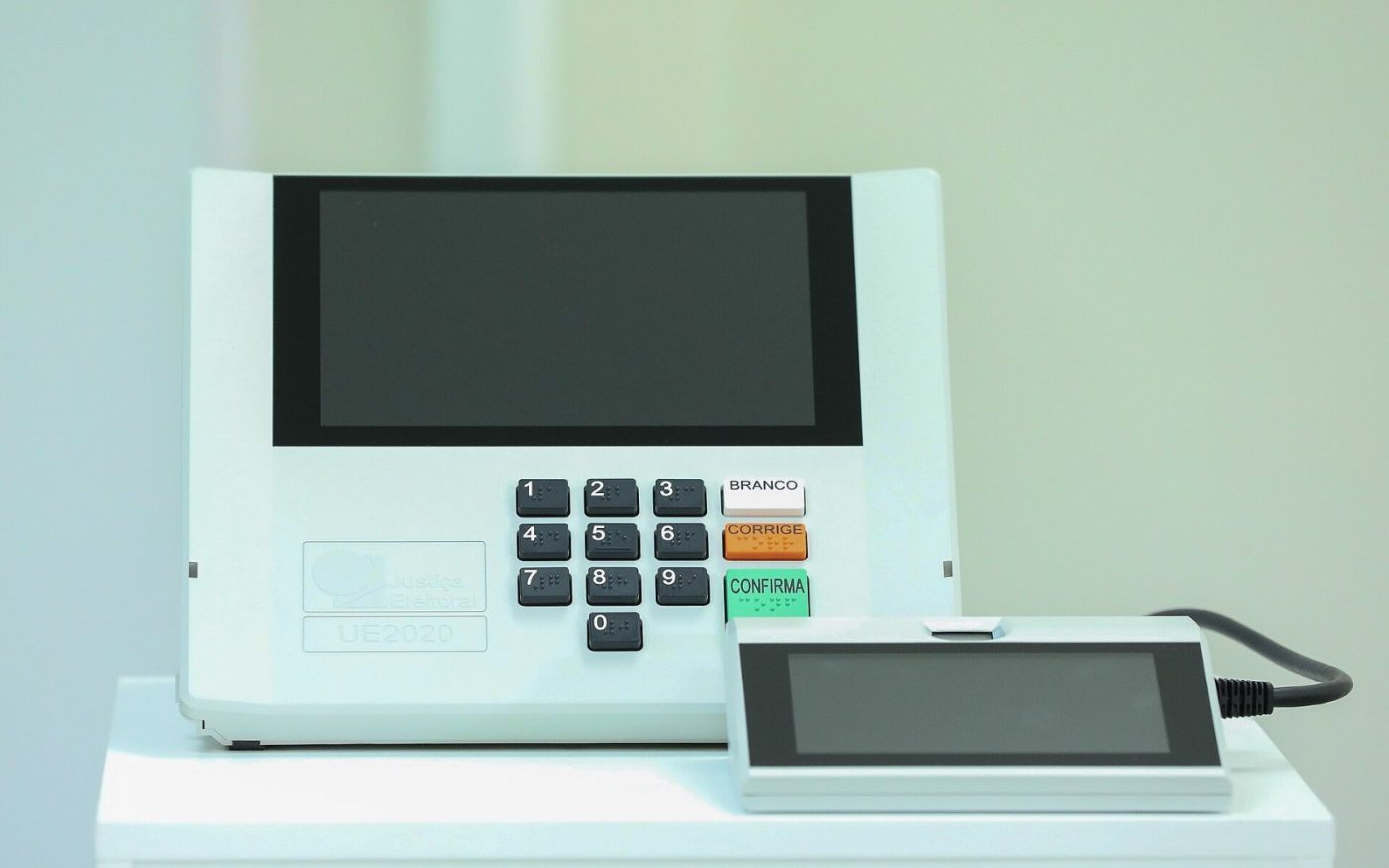
The first round also strengthened the right in Congress. Bolsonaro’s Liberal Party is set to hold more than a third of the Senate, an unusually large bloc in Brazil’s fragmented system. First-round abstention reached 21.08%, the highest in 28 years, with more than 33.4 million registered voters staying away (AP via ITV News). The electoral court, the TSE, says 158.7 million Brazilians are eligible to vote this year (TSE).
Jair Bolsonaro is serving a 27-year sentence, under house arrest, for attempting a coup; his son has promised him an amnesty if elected. Flávio Bolsonaro has also faced scrutiny over the collapse of Banco Master, acknowledging that he received money from banker Daniel Vorcaro to fund a film about his father but denying wrongdoing. Lula, 80, is seeking a fourth, non-consecutive term (MercoPress; AP via ITV News).
Key facts
- Runoff date: Sunday, October 25, 2026.
- First round (October 4): Flávio Bolsonaro about 47%, Lula about 45%.
- Datafolha (published October 22): Bolsonaro 47%, Lula 46%; margin of error ±2 points.
- Quaest (published October 21): Bolsonaro 45%, Lula 44%; margin of error ±2 points.
- Electorate: 158.7 million eligible voters; voting is compulsory, though fines for abstaining are small.
- Still to come: a TV Globo debate scheduled for Friday and final Datafolha and Quaest polls expected on the eve of the vote.
Analysis: what it means
With the main polls showing a one-point race, the result is likely to hinge less on persuasion than on mobilisation. Abstention in the first round was unusually high and, as analysts quoted by AP and MercoPress note, tends to fall hardest on lower-income voters who form Lula’s core base. His campaign’s most plausible route to victory runs through higher turnout in the big south-eastern states of São Paulo, Minas Gerais and Rio de Janeiro, where abstention was above average.
Bolsonaro, meanwhile, needs to hold the roughly 9 million votes that went to other, mostly centre-right and right-wing first-round candidates. The pollsters’ first-round miss is another source of uncertainty: having underestimated him once, surveys may again be imperfect guides, which is one reason prediction markets have priced him as a clear favourite even as polls show a tie.
The stakes extend beyond Brazil. A Bolsonaro victory would hand Latin America’s largest economy to an ally of US President Donald Trump who has pledged to join the Washington-backed Americas Shield security coalition, and would raise the question of an amnesty for his father. A Lula win would keep in office a leader who has criticised US interference and cultivated closer ties with Beijing. Either way, the winner will face a Congress in which the right has grown stronger.
Sources
- Reuters (via Yahoo News) — Flavio Bolsonaro and Lula about even ahead of Brazil runoff, Datafolha poll shows
- The Rio Times — Brazil Runoff Poll Puts Flávio 1 Point Up (Quaest)
- MercoPress — Flávio Bolsonaro edges Lula in the first round; both head to an October 25 runoff
- ITV News (AP) — What to know about the election runoff between Lula and Flávio Bolsonaro
- ITV News (AP) — Brazil’s Lula and Flávio Bolsonaro trade barbs in 1st debate only days before presidential runoff
- Tribunal Superior Eleitoral (TSE) — Faltam 30 dias: Brasil tem mais de 158 milhões de eleitoras e eleitores aptos a votar