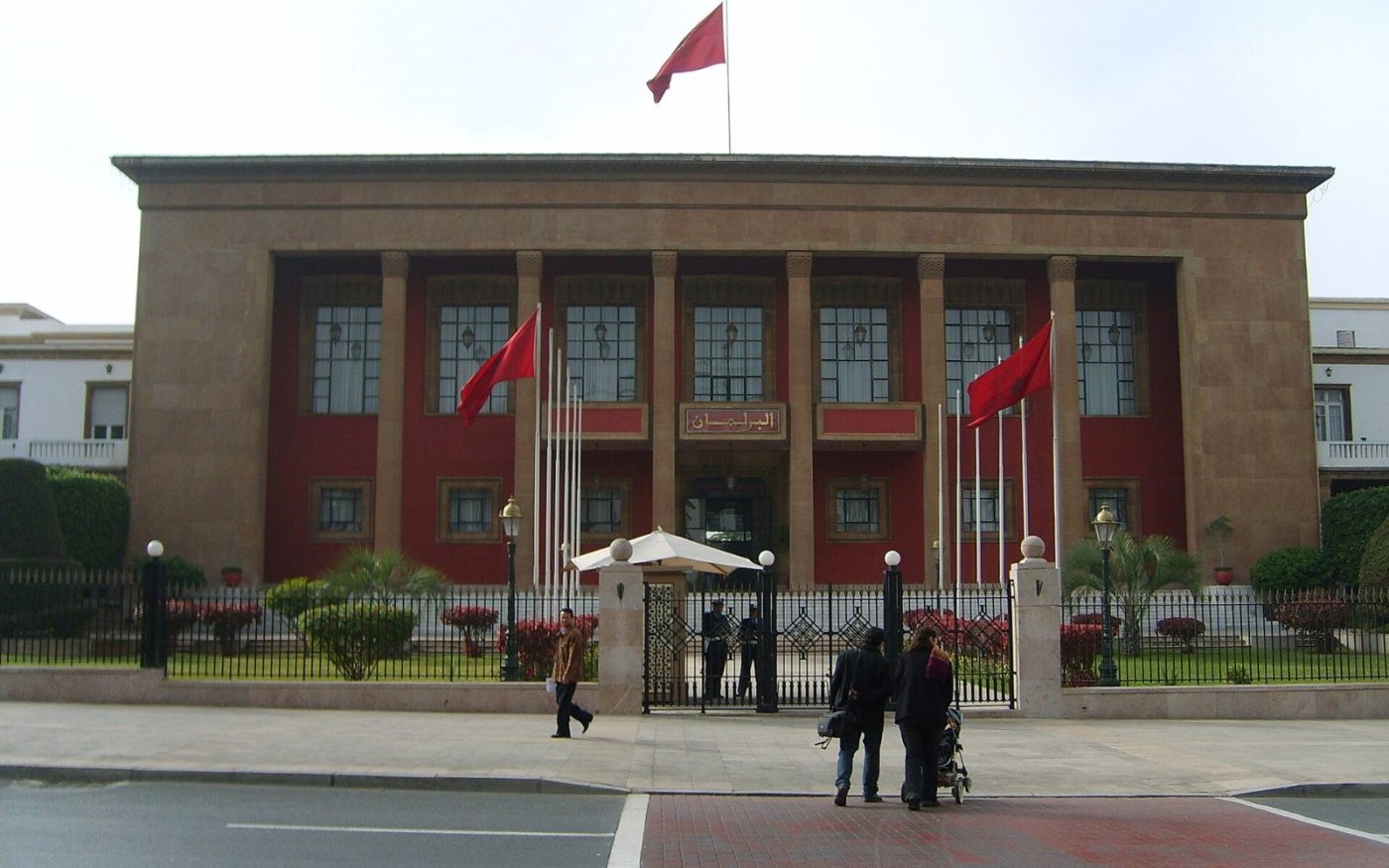
Morocco’s House of Representatives on Thursday evening, October 22, 2026, approved the five-year programme of Head of Government Fatima Ezzahra El Mansouri by 204 votes to 127, giving the country’s first woman-led government the parliamentary confidence it needs to take office fully. The vote came six days after King Mohammed VI swore in her cabinet and three days after she set out its agenda before both chambers of parliament (Hespress).
What happened
A total of 331 deputies took part in the vote in the 395-seat lower house, with 204 in favour and 127 against; no abstentions were reported. Hespress described the result as adoption by an absolute majority. Under Article 88 of Morocco’s constitution, the head of government presents a programme to both houses after the king appoints the cabinet, and the government is invested once it wins the confidence of the House of Representatives (Hespress).
El Mansouri presented the programme for 2026–2031 at a joint sitting of parliament on Monday, October 19. The official national portal, quoting state news agency MAP, framed it as a “contract” centred on purchasing power, jobs for young people, better schools and public hospitals, narrowing regional disparities and securing water, energy and food supplies (Maroc.ma).
The programme includes several headline pledges, according to Morocco World News: raising monthly direct social assistance from 500 to 1,000 dirhams by the end of the term, a minimum basic pension of 3,000 dirhams a month, widows’ pensions at 100% rather than 50% of the relevant amount, and capped electricity bills for eligible households. It targets average growth of 5% a year from 2027 to 2031, inflation of about 2%, a budget deficit near 3% of GDP and public debt falling to about 62% of GDP by 2031, along with 1.8 billion cubic metres of desalinated water and a renewable share above 52% of the energy mix by 2030.
The debate was sharp. In the days before the vote, opposition groups including the National Rally of Independents (RNI), which led the previous government, accused the programme of duplication and inconsistencies, while the Islamist Justice and Development Party (PJD) said promises had been scaled back and announced anti-corruption bills of its own (Hespress coverage).
Background
El Mansouri’s Authenticity and Modernity Party (PAM) won the September 23 legislative election with 97 seats, ahead of the RNI on 66, Istiqlal on 65 and the PJD on 54. Turnout was about 38%, down from roughly 50% five years earlier. King Mohammed VI named El Mansouri, a lawyer, former mayor of Marrakech and housing minister in the outgoing cabinet, as head of government on September 29 (Reuters via TimesLIVE).
Her coalition, made up of PAM, the conservative Istiqlal party and two smaller left-wing parties, controls 210 of the 395 seats, according to AFP. The cabinet sworn in at the Royal Palace in Rabat on October 16 kept 13 of the previous government’s 31 ministers, including Foreign Minister Nasser Bourita and Interior Minister Abdelouafi Laftit, and includes seven women counting the head of government. Fouzi Lekjaa, who also heads the Royal Moroccan Football Federation, was promoted to economy and finance minister (AFP; Morocco World News).
Key facts
- Confidence vote: October 22, 2026; 204 for, 127 against, out of 331 votes cast.
- Programme presented: October 19, 2026, to a joint session of both chambers.
- Cabinet sworn in: October 16, 2026, before King Mohammed VI in Rabat.
- Election: September 23, 2026; PAM first with 97 of 395 seats; turnout about 38%.
- Coalition: PAM, Istiqlal and two smaller left-wing parties, about 210 seats.
- Milestone: El Mansouri is the first woman to lead a Moroccan government.
Analysis: what it means
The vote formally ends Morocco’s post-election transition and clears the way for the government to move on to its first big test, the 2027 budget, which parliament is already scheduling. The margin was comfortable: 204 votes is above the 198 that would represent an absolute majority of the full house. It was nonetheless a few votes short of the coalition’s nominal strength, a reminder that attendance and discipline will matter over a five-year term.
The bigger challenge is credibility with voters. Turnout of around 38% and the youth-led protests of 2025 point to deep frustration over jobs, health care and the cost of living, and the programme’s flagship promises on social aid, pensions and youth employment are aimed squarely at those grievances. Critics, including commentators at TelQuel who noted the absence of figures and deadlines in the health chapter, will be watching whether those pledges are funded in the coming budget. The government will also oversee the final stretch of preparations for the 2030 World Cup, which Morocco co-hosts with Spain and Portugal.
As always in Morocco’s constitutional monarchy, the elected government operates alongside a palace that retains broad authority, particularly over foreign affairs, defence and religious matters. The continuity at the foreign and interior ministries suggests that, whatever changes in social and economic policy, Morocco’s strategic direction is not expected to shift.
Sources
- Hespress FR — Le programme gouvernemental adopté par 204 voix contre 127
- Maroc.ma (national portal, MAP) — Le programme gouvernemental, un contrat politique et institutionnel fondé sur la haute confiance royale
- Morocco World News — King Mohammed VI presides over ceremony to appoint new government members
- Morocco World News — Here’s what Morocco’s new government plans for jobs, social reform and the economy
- Kuwait Times (AFP) — King appoints new Morocco govt led by female premier
- TimesLIVE (Reuters) — Morocco’s king appoints first woman prime minister following election
- TelQuel — Santé : le programme El Mansouri sans chiffres ni échéances